
By Sweroad · Published
Road assessment programmes give road authorities an evidence-based measure of how well a road protects the people who use it, before crashes occur. Sweroad has applied the methodology at national scale in two very different settings: EuroRAP in Kazakhstan and iRAP Star Ratings in Ethiopia.
01
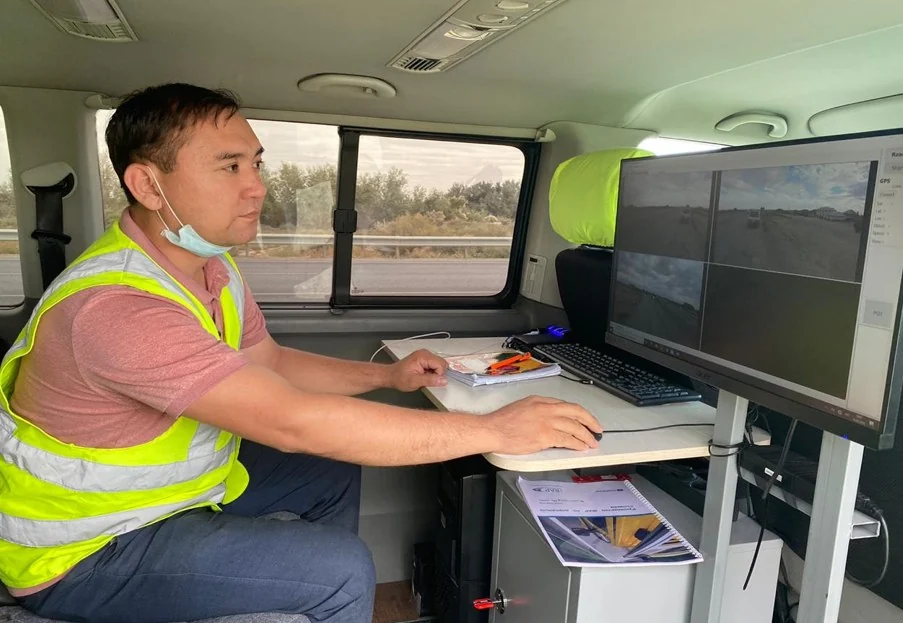
What EuroRAP and iRAP assessments measure
The International Road Assessment Programme (iRAP) and its European counterpart EuroRAP use a common methodology. Surveyors record road attributes such as lane width, roadside hazards, junction layout and facilities for pedestrians and cyclists. These are coded and used to give each section a Star Rating from one star (least safe) to five stars (safest) for vehicle occupants, motorcyclists, pedestrians and cyclists.
The ratings feed investment plans that identify cost-effective countermeasures. Because they describe risk built into the road itself, they complement crash data and help authorities act before deaths and serious injuries occur. Targets 3 and 4 of the United Nations Global Road Safety Performance Targets use three-star or better as the benchmark: Target 3 for new roads and Target 4 for travel on existing roads.
02
Kazakhstan: building a national EuroRAP capability
Kazakhstan’s road network had a high incidence of traffic crashes. Under the East-West Roads Development Project, financed by the International Bank for Reconstruction and Development, Sweroad was lead firm for the implementation of EuroRAP for the Committee for Roads (2019–2021). The team analysed the national road network, crash data and the legislative framework for road safety.
- Network assessment: around 5,000 km of public roads of national importance and about 1,000 km of city streets assessed using EuroRAP.
- Certified experts: 20 national experts trained and certified in the EuroRAP methodology.
- Centre of excellence: foundation documents prepared for a EuroRAP Center of Excellence in Kazakhstan.
- Investment proposals: detailed proposals for targeted road safety improvements, with a budget plan intended to direct investment to the most critical locations.
03
Ethiopia: Star Ratings within a national road safety framework
In Ethiopia, network assessment formed one part of a wider effort to establish a systematic approach to road safety. Sweroad analysed the road safety system against the five United Nations road safety pillars, covering data, policies and objectives, stakeholder responsibilities, the role of the Lead Agency, and past and ongoing initiatives.
- iRAP Star Ratings: more than 18,000 km of the federal paved road network assessed.
- Crash data: a GIS-based crash database for analysing road safety problems.
- Strategy and standards: a national road safety strategy and action plan, a manual for road safety audits and inspections, and manuals for traffic signs, road markings and road safety management.
- Training: programmes in road safety audit, road safety inspection, iRAP Star Rating, risk mapping and black spot management.
04
Lessons from two national programmes
These lessons draw on the two assignments and on established road assessment practice. They are general guidance for authorities planning an assessment programme.
- Combine risk ratings with crash data: Star Ratings show where the road design creates risk; crash records show where harm has occurred. Ethiopia’s programme included both.
- Build national capacity from the start: certifying national experts, as in Kazakhstan, allows assessments to continue and be repeated after the consultant’s assignment ends.
- Link results to investment: assessments create value when they lead to funded works. Kazakhstan’s investment proposals and budget plan were intended to connect the ratings to future road safety spending.
- Embed the method in standards and institutions: manuals, audit and inspection procedures, and a centre of excellence give the methodology a permanent home.
- Include urban streets: city streets carry many of the pedestrians and cyclists most at risk. Kazakhstan’s assessment covered about 1,000 km of them alongside the national network.
- Invest in survey and coding quality: the credibility of every rating depends on consistent data collection, coding and quality control.
- Re-assess to track progress: repeating ratings after improvements shows progress towards national targets and the three-star benchmark of UN Targets 3 and 4.
05
Related experience
Sweroad’s published references also include the EU-funded EU for Serbia – improving road safety project (2019–2025, joint-venture partner). The Sweroad Road Safety Academy offers training in road safety audit and assessment methods.
Evidence and sources
- Sweroad case study: Advancing Road Safety in Kazakhstan with EuroRAP.
- Sweroad case study: A Comprehensive Road Safety Framework in Ethiopia.
- Road Safety: published references, including the East-West Roads Development Project in Kazakhstan (2019–2021) and EU for Serbia – improving road safety (2019–2025).
- Sweroad Academy: road safety training and capacity development.
- Star Rating methodology: International Road Assessment Programme (iRAP) public documentation. Targets 3 and 4: United Nations Global Road Safety Performance Targets.